Ideas & reading guides
Who Was Annie Besant? Her Life, Theosophy and Books
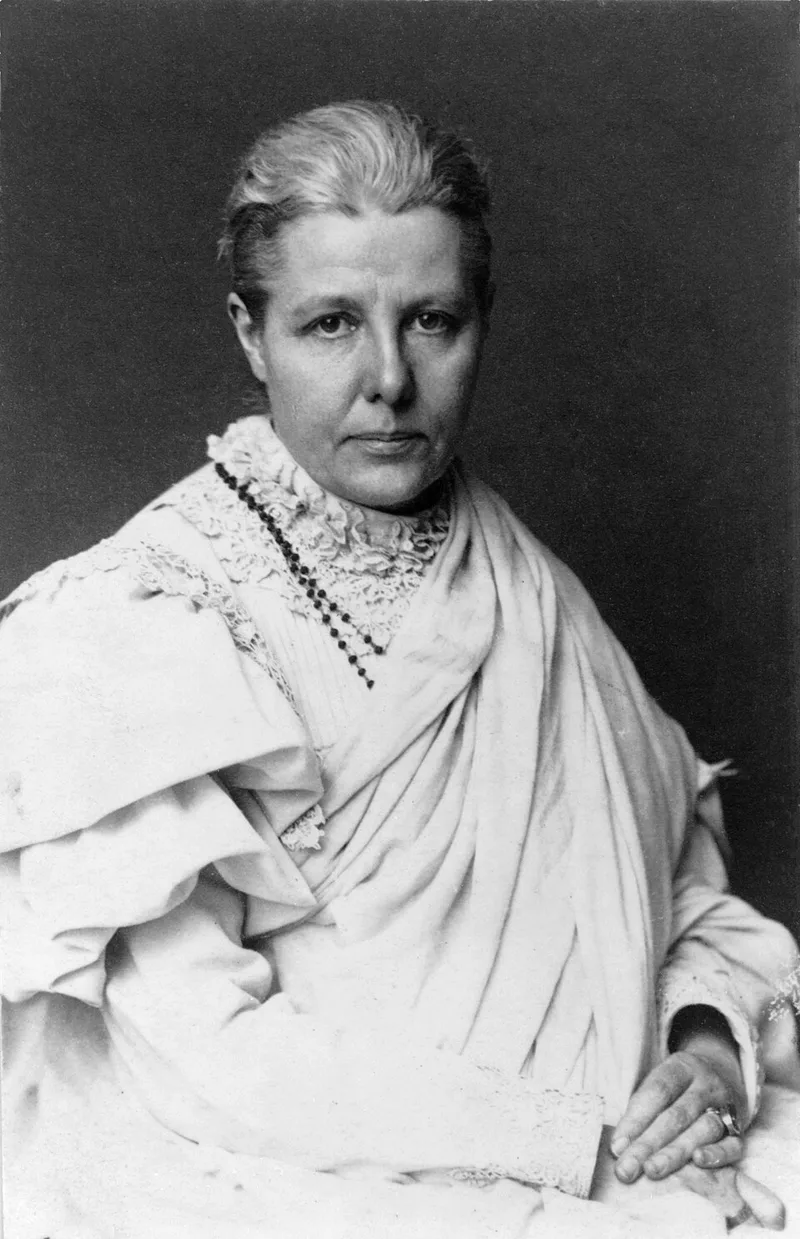
Annie Besant (1847–1933) was a British writer, social reformer and political campaigner who became a leading figure in Theosophy. She defended birth-control information, supported the London matchworkers and later campaigned for Indian self-government. She also wrote about reincarnation, unseen bodies and the supposed colours and shapes of thought.
Those interests can seem impossible to reconcile. How did a famous atheist become an advocate of spiritual Masters? Why did a woman concerned with wages and education spend so much time writing about invisible worlds? An Annie Besant biography becomes more interesting when we follow the questions she carried from one phase of her life into the next, rather than treating her conversion as the end of one person and the beginning of another.
This is the story behind our documentary, The Atheist Who Claimed to See Thoughts. It also explains what a reader will actually find in her books—and why reading a historical claim is different from accepting it.
 18:45
Watch · HIPS Books on YouTube
The Atheist Who Claimed to See Thoughts | Annie Besant Life & Books
Annie Besant’s life and nine books: from atheism, the birth-control trial and workers’ rights to Theosophy, Indian Home Rule and her claims about thought.
Plays from YouTube when you press play.
From a clergyman’s wife to an atheist campaigner
Born Annie Wood in London in 1847, Besant married the Anglican clergyman Frank Besant in 1867. They had two children, Digby and Mabel. Religious doubt, disagreements within the marriage and her determination to think and write for herself eventually made that life untenable. The couple separated in 1873.
In her later Autobiography, Besant connects her loss of Christian faith with the problem of suffering, including the experience of her daughter’s illness. This is her own retrospective account, not a medical explanation of her beliefs. What matters for the later books is that suffering remained a question she wanted an answer to. Rejecting one answer did not make the question disappear.
She became a prominent secularist, working with Charles Bradlaugh, speaking publicly and writing for the National Reformer. Atheism here was not simply a private absence of religious belief. It brought her into disputes about who could speak, what ordinary people should be allowed to read and how much authority religious institutions should exercise over their lives.
The best-known confrontation came in 1877, when Bradlaugh and Besant republished Charles Knowlton’s Fruits of Philosophy, a booklet containing birth-control information. They were prosecuted, convicted, and then had the convictions overturned on appeal. English Heritage’s account places the case within her wider public campaigning.
The custody dispute over Mabel followed in 1878. It should not be compressed into the misleading claim that a criminal court took her daughter away as the sentence for publishing the booklet. The prosecution and custody proceedings were different events. Together, however, they show how costly public dissent could become in her personal life.
What did Annie Besant do in the matchgirls’ strike?
In 1888 Besant helped publicize conditions at Bryant & May’s match factory in east London. The workers faced low pay, deductions and dangerous conditions. Her journalism, fundraising and support helped make their dispute visible beyond the factory.
But the women were not passive characters waiting for a famous reformer to arrive. They organized and took the action themselves. As English Heritage’s history of the strike emphasizes, the matchworkers initiated the walkout; their history of resistance also preceded Besant’s involvement.
Giving them that credit makes Besant’s contribution clearer, not smaller. She had access to print, public meetings and people with influence. She could help workers make their own case heard. In November 1888 she was also elected to the London School Board, taking her campaigning into the administration of public education.
This part of her life matters when we reach the occult books. Their repeated emphasis on duty and service did not appear in a writer who had never encountered ordinary working conditions. The difficult question is how her later spiritual explanations fitted—or sometimes failed to fit—the social problems she already knew.
Why did Annie Besant become a Theosophist?
In 1889 the journalist W. T. Stead asked Besant to review Helena Blavatsky’s The Secret Doctrine. Besant later described finding in it connections between subjects she had been considering separately. She met Blavatsky and joined the Theosophical Society that year.
It is tempting to tell this as a single dramatic afternoon: the atheist opens a book, closes it a believer, and abandons reason. Her own narrative is less tidy. In the chapters surrounding the conversion in her Autobiography, she describes earlier dissatisfaction and investigations extending beyond that reading assignment. The book supplied a framework at a moment when she was already looking for one.
That does not establish that the framework was true. It explains why it could be compelling to her. Theosophy offered accounts of suffering, moral responsibility, consciousness and human development that claimed to connect religious insight with a wider order of nature.
Besant was not a founder of the Theosophical Society. It had been established in New York in 1875, long before she joined. Nor did she immediately become its international President when Blavatsky died in 1891. She became President in 1907, after Henry Steel Olcott. The Society’s institutional history documents that sequence, although its accounts of supernatural events express the movement’s own beliefs.
For the ideas behind the organization, our guide to what Theosophy means separates the older word from the modern Society. Our Blavatsky biography explains the author who became so important to Besant.
Thought-Forms: did Besant really claim to see thoughts?
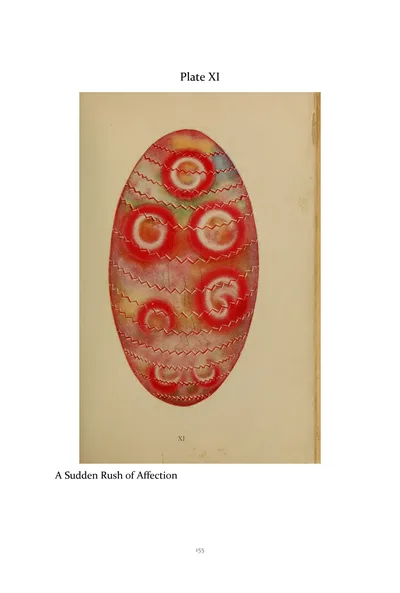
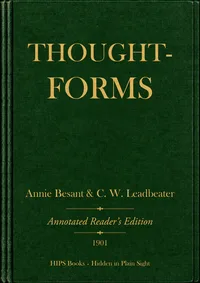
The striking pictures in Thought-Forms make the question almost unavoidable. Published in 1901 and written with C. W. Leadbeater, the book presents thoughts and emotions as having colours and shapes visible through clairvoyant perception.
Within the authors’ account, a thought is not merely a private sentence in the head. It produces an effect in subtle matter, with its quality, character and definiteness expressed visually. Affection, anger, devotion and forms attributed to music appear in the illustrations. The intention is to make an invisible moral and emotional life appear readable.
The crucial qualification is claimed. These are illustrations representing the authors’ descriptions, not photographs of thoughts, brain scans or independent experimental records. Their vividness is part of what makes the book memorable; vividness is not verification. Our guide to Thought-Forms looks more closely at the historical pictures and their interpretation.
Leadbeater’s Man Visible and Invisible approaches related imagery through his account of the aura and human bodies. It helps explain the vocabulary shared by the books, but it is another statement of the teaching, not independent confirmation of it.
There are therefore two questions a reader can keep separate: What did Besant and Leadbeater believe they were showing? And what would count as reliable evidence that their explanation was correct? You can study the first closely without assuming the second has been settled.
Nine books, five questions: what was Besant trying to explain?
Besant’s occult vocabulary can make her books look less approachable than they are. A useful starting point is the ordinary question behind each group. The following is a reading map, not a claim that all nine titles belong to one collection.
Why do things happen to us? Karma and responsibility
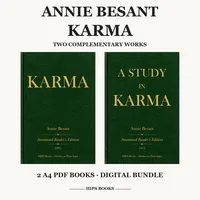
Karma and A Study in Karma examine cause, action and consequences through a theory extending beyond a single lifetime. Besant’s purpose is not simply to say that events are fixed in advance: the possibility of changing future conditions through present action matters to her argument.
Nevertheless, a theory that explains suffering through past causes can easily be used to blame sufferers. A critical reader should resist that shortcut. The text cannot establish what caused a particular person’s illness, poverty or misfortune. Nor should a spiritual explanation replace efforts to relieve harm. The two-book Karma collection lets readers compare the works rather than treating their titles as interchangeable.
What is the self? Bodies and consciousness
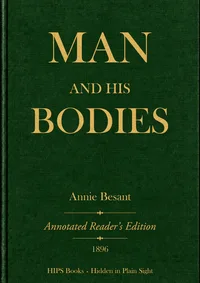
In Man and His Bodies, Besant distinguishes the person from the physical and subtler bodies through which she says the person acts. The astral, mental and causal vocabulary belongs to this scheme; it is not an alternative medical anatomy.
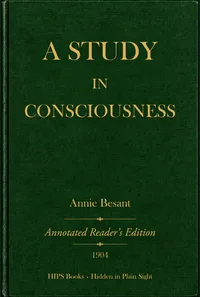
A Study in Consciousness develops the larger argument. Its two parts move from the development of consciousness towards will, desire and emotion. This is the more demanding book: knowing what Besant means by a vehicle or a plane helps before beginning it.
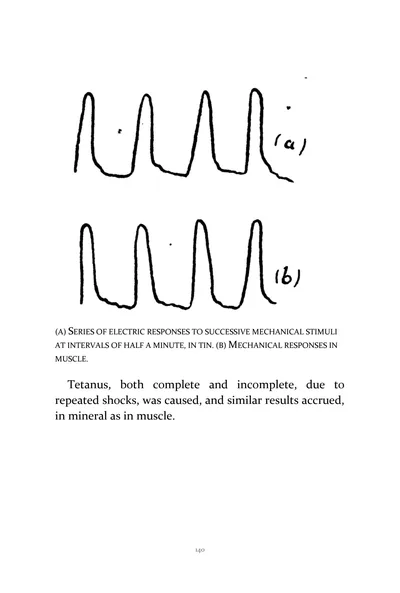
Her use of diagrams and experimental response curves is particularly worth reading slowly. An observed response and an explanation of consciousness are not the same thing. A physical curve cannot, by itself, carry all the metaphysical conclusions a writer places upon it. The book is revealing both for its proposed theory and for its attempts to connect different kinds of evidence.
Can attention be trained? Thought Power
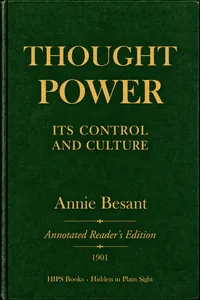
Thought Power: Its Control and Culture is a more manageable place to start. It asks how attention, memory, observation, concentration and meditation relate to one another. Its interest for a reader need not depend entirely on its claims about thought-transference.
There is a recognizable practical problem beneath the terminology: reading a page is not necessarily the same as thinking about it. Besant encourages deliberate attention rather than the accumulation of words. You can examine that advice on its own terms while remaining unconvinced by the book’s proposed occult mechanism.
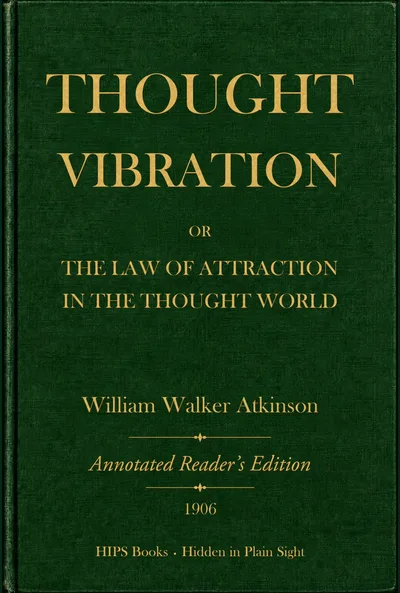
That distinction also prevents a common confusion. Besant’s work is Theosophical. Atkinson’s Thought Vibration belongs to New Thought. Similar discussions of will and mental influence do not make the two movements identical.
What would thought look like? Thought-Forms
Thought-Forms turns mental life into a visual language. Read it alongside Thought Power and the contrast becomes useful: one discusses the cultivation of thought, while the other depicts its supposed effects. Ask whether a picture clarifies the author’s teaching or is being allowed to substitute for evidence.
What is spiritual practice for? Yoga and discipleship
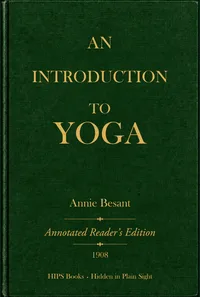
An Introduction to Yoga grew out of four Benares lectures delivered in December 1907. It concerns consciousness and mental discipline rather than presenting a sequence of physical postures. Its chapters on the nature of yoga, schools of thought, science and practice show how Besant tried to organize the subject.
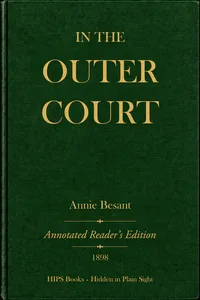
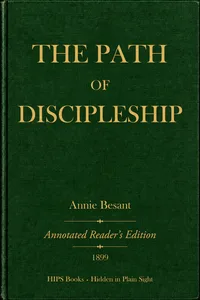
In the Outer Court and The Path of Discipleship ask what preparation and responsibility should accompany a desire for spiritual knowledge. Character and service are important to both. Their accounts of initiation and spiritual Masters remain religious claims, not credentials HIPS can certify.
For a shorter book-by-book route, see Annie Besant’s books: where to start. It is a reading-order guide; this article explains the life and questions behind those works.
India, Home Rule and the problem of spiritual authority
Besant’s Theosophical work did not mean a simple withdrawal from public life. In India, her educational and political campaigning became a major part of her later career. She helped establish the Central Hindu College at Benares in 1898, organized a Home Rule League in 1916, and was interned in 1917. That year she became the first woman President of the Indian National Congress. The Congress’s record of its past President documents that political role; it should not be confused with leadership of Theosophy.
The University of Bristol’s South Asian Britain biography provides another route into this part of her life. It is important not to reduce her Indian career to a footnote beneath the more spectacular occult claims. Equally, admiration for her campaigning does not settle the truth of her spiritual assertions.
The relationship with Jiddu Krishnamurti exposes that tension sharply. Besant and other Theosophists invested him with expectations concerning a coming World Teacher. In 1929 he dissolved the Order of the Star, the organization formed around that expectation, and rejected the idea that an organization could lead people to truth.
The Krishnamurti Foundation’s timeline and account of the dissolution place the event on 3 August 1929. His phrase “Truth is a pathless land” challenged the very kind of spiritual structure that supporters had assembled around him. For someone reading Besant today, this is not a minor ending to the story. It raises a question her books themselves invite: when does guidance help a reader think, and when does it ask that reader to surrender judgment?
How to read Annie Besant without surrendering your judgment
Begin by identifying the kind of claim in front of you. A suggestion about paying closer attention, an autobiographical recollection, a religious account of reincarnation and a claim to perceive invisible bodies do not require the same kind of evidence. Keeping them distinct makes the books easier to understand and harder to misuse.
Also notice what the historical writing takes for granted. Racial and civilizational hierarchies, assumptions about caste and sweeping claims about human development should not be smoothed into a reassuring modern message. They are part of the text’s history and need to remain open to criticism. Health claims and explanations of suffering likewise do not become safe advice simply because the language sounds compassionate.
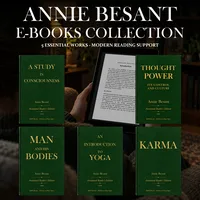
If you want a first book, Thought Power offers a relatively direct route into her account of attention. Choose Man and His Bodies for terminology, Thought-Forms for the illustrated claims, or A Study in Consciousness for the larger philosophical system. The five-book Essential Works collection includes Consciousness, Thought Power, Man and His Bodies, An Introduction to Yoga and Karma. It does not include all nine books discussed here; in particular, Thought-Forms is separate.
Besant is worth reading neither because she must have been right nor because her contradictions can be dismissed with a label. She brought questions about suffering, freedom, thought and responsibility into very different public and intellectual worlds. The books let us follow those questions closely—and keep asking where her answers persuade, where they speculate and where they fail.
Sources and reading notes
The biographical sections draw on Besant’s 1893 Autobiography, English Heritage’s accounts of Besant and the matchworkers, the Theosophical Society’s institutional history, the Indian National Congress presidential record, the University of Bristol’s South Asian Britain project and the Krishnamurti Foundation timeline, linked beside the relevant claims. These sources have different perspectives: autobiography is retrospective, and institutional histories represent the organizations concerned.
The discussions of her books were prepared using the historical texts and the current HIPS reading editions. Modern explanations in this article are HIPS interpretations, not additional words attributed to Besant. Our editorial method explains how historical writing and new reading support are kept separate. The accompanying documentary on YouTube was published on 31 October 2026.
Portrait: Library of Congress, Annie Besant, c. 1897, photographer unidentified. The Wikimedia Commons copy was restored by Yann and is marked public domain. It is a historical photograph, not an AI-generated portrait.