Ideas & reading guides
Helena Blavatsky: Her Life, Books and Lasting Influence
Helena Blavatsky was a nineteenth-century writer and a co-founder of the Theosophical Society. Often called Madame Blavatsky, she tried to connect religion, philosophy and the study of nature through a teaching she presented as ancient wisdom. Her books still attract readers, but her life also raises difficult questions about evidence, authority and the difference between studying a belief and accepting it.
That tension makes her more interesting than either a flawless spiritual teacher or a figure to dismiss without reading. To understand her, it helps to follow the books she actually wrote. They show someone arguing against narrow religious certainty and materialism, while making striking claims of her own.
Who was Madame Blavatsky?
Helena Petrovna Blavatsky lived from 1831 to 1891. She was born in Yekaterinoslav, then part of the Russian Empire and now Dnipro in Ukraine. Her later public career took her through the United States, India and Europe. The Theosophical University Press biography provides the movement's account of that life; it is useful, but it is also an account written from within the tradition she helped establish.
That matters most when the biography moves from ordinary events into extraordinary claims. An author's date of publication and an author's claim to have received secret instruction are not the same kind of evidence. Blavatsky's accounts of spiritual teachers and hidden learning belong to the history of what she and her supporters believed. They should not quietly become verified facts in a modern introduction.
Her writing offers a firmer starting point. In it, she repeatedly asks why human beings should be understood only as physical organisms, or why one religious tradition should claim the whole truth. She looks for connections between accounts of the soul, the universe and moral responsibility. Readers do not need to agree with her answers to see why the questions had force.
Consider two different ways of approaching her. One reader asks whether every story about her spiritual powers is true. Another asks what her books reveal about the nineteenth-century search for an alternative to both church authority and a purely material view of life. The second question is easier to investigate through the text, and it does not require the reader to settle the first.
How the Theosophical Society gave her ideas a home
Blavatsky helped found the Theosophical Society in New York in 1875, alongside Henry Steel Olcott and other early members, including William Quan Judge. The movement created a setting for comparative religious study and discussions of powers that its members believed ordinary science had not yet explained. Her subsequent work in India widened the geographical setting of those discussions. These stages appear in the institutional biographical account.
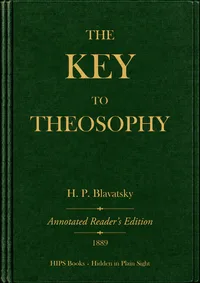
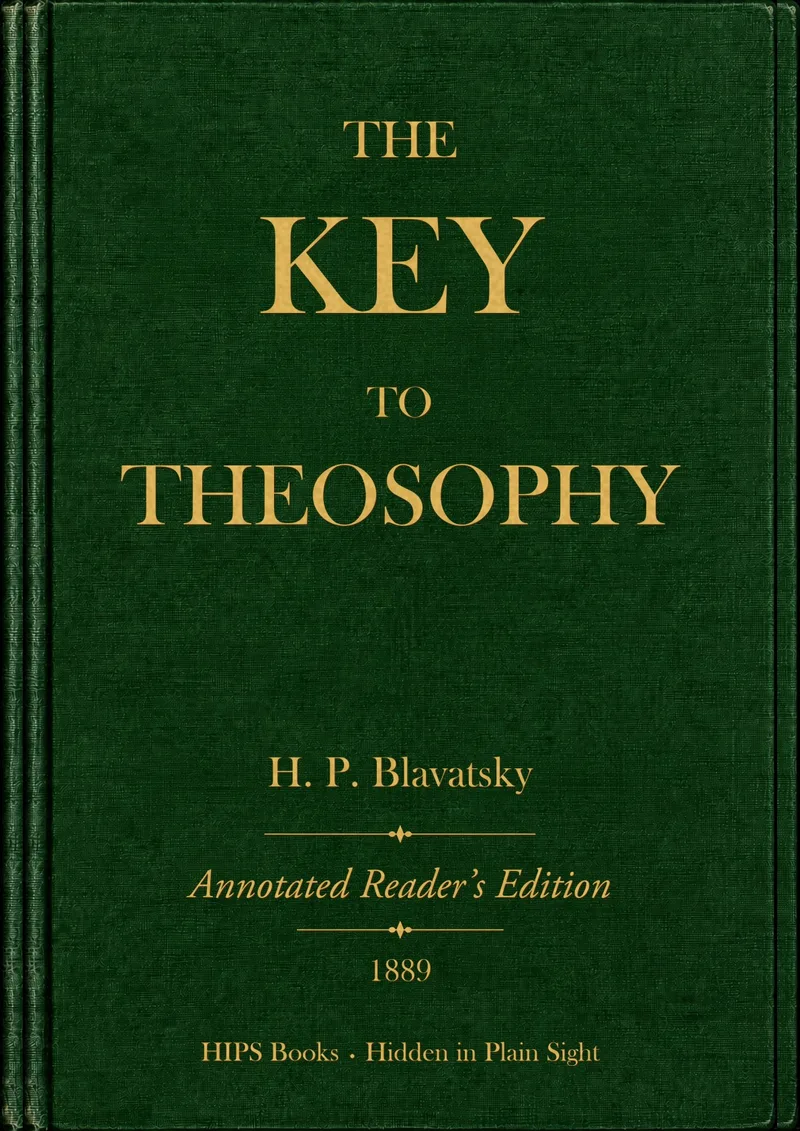
The Society and Blavatsky's teachings should not be treated as identical. In The Key to Theosophy, she separates membership of a society from acceptance of every explanation offered by an individual teacher. Her dialogue also distinguishes public study from the more demanding commitments of an inner group. Those distinctions help explain why the movement could contain people with different interests and convictions.
For a beginner, Theosophy here means the modern movement's search for an underlying spiritual wisdom linking human beings and the world. It does not mean that all religions say precisely the same thing. Blavatsky interpreted religious traditions through her own framework, and those interpretations can be challenged.
Our existing introduction to Theosophy, Anna Kingsford and Marie Caithness explains the wider movement and its different voices. That wider setting is important. Blavatsky was central, but she was not the only person asking how older religious ideas might speak to modern life.
Blavatsky's books: four different ways into her thought
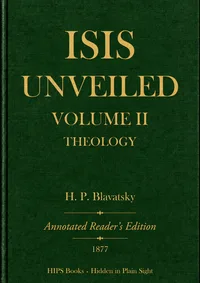
Her major titles are not interchangeable. Their publication dates and differences help a reader choose a sensible starting point. The dates below are recorded in the biographical bibliography and, for the HIPS editions, their historical title and edition pages.
| Work | First publication | What a new reader encounters |
|---|---|---|
| Isis Unveiled | 1877 | A large argument about religion, science and occult knowledge |
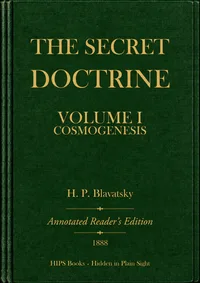
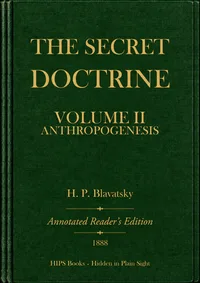
| The Secret Doctrine | 1888 | A wide-ranging account of cosmic and human origins |
| The Key to Theosophy | 1889 | A question-and-answer explanation of teachings and objections |
| The Voice of the Silence | 1889 | A shorter work concerned with spiritual discipline and compassion |
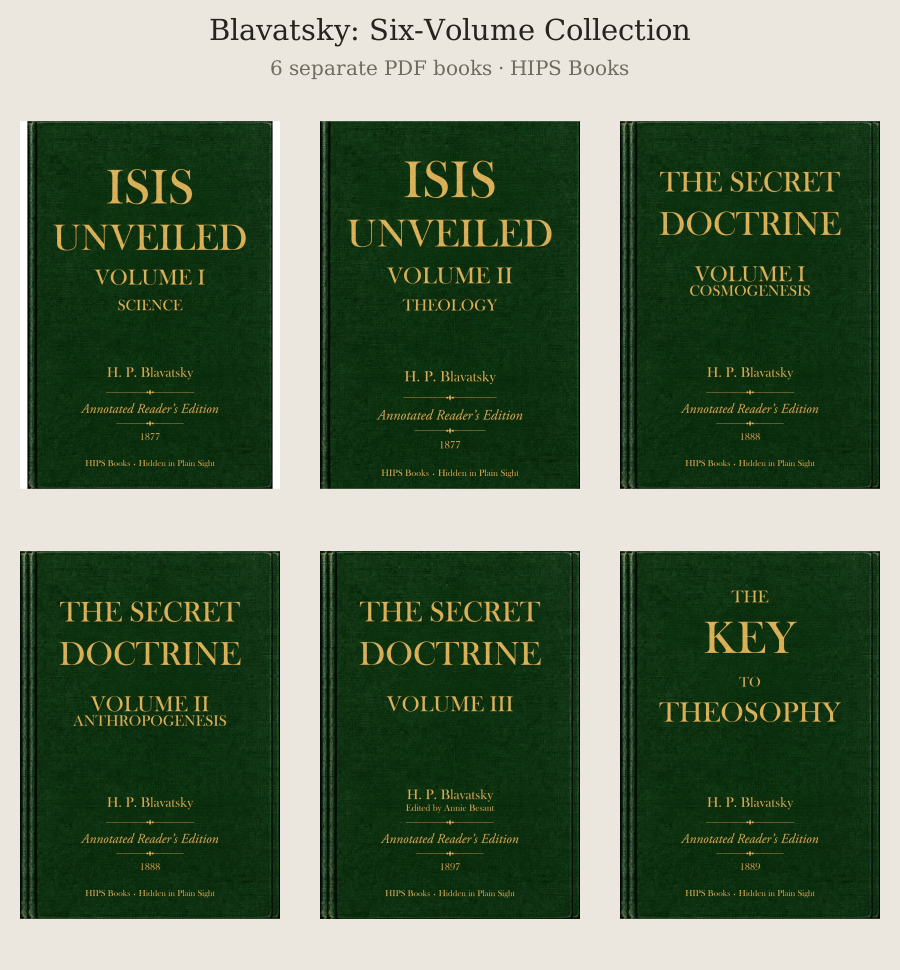
The most famous title is often the hardest place to begin. The Secret Doctrine moves between symbolic accounts of creation, religious comparisons, unfamiliar terms and disputes with contemporary science. Its original publication contained two volumes: Cosmogenesis, on the universe, and Anthropogenesis, on humanity. A third volume, edited by Annie Besant, appeared after Blavatsky's death in 1897.
For many readers, The Key to Theosophy is the clearer entry. Its questioner challenges the teacher, asks for definitions and returns to points that have not been understood. The form gives readers permission to slow down. It also makes disagreements visible rather than burying them beneath a grand statement.
For example, the question of reincarnation becomes a question about identity: what, exactly, is supposed to return? The dialogue distinguishes a temporary personality from an enduring individuality. Whether that distinction persuades you or not, it is more precise than the vague claim that a person simply comes back unchanged. Our guide to karma and reincarnation in the book follows that argument step by step.
What she was trying to connect
Blavatsky's project was larger than a collection of unusual beliefs. She wanted a picture of the universe in which mind, matter and moral life belonged together. Her books draw on religious texts, myths, philosophical terms and scientific debates, but bring those materials into a specifically Theosophical interpretation.
The Proem of The Secret Doctrine, Volume I gives a useful example. It introduces an ultimate reality beyond ordinary description, recurring cycles of manifestation, and a shared spiritual basis for individual life. These are the assumptions from which the book proceeds. They are not conclusions demonstrated by a modern laboratory experiment.
Another example is her account of karma in The Key to Theosophy. She treats actions as part of a continuing network of consequences rather than isolated moments that disappear when they end. That belief supports her insistence on ethical responsibility. It also raises a question that a thoughtful reader should keep open: how could anyone reliably know the unseen causes of another person's suffering?
Her attraction to Indian and Buddhist vocabulary does not make her books neutral summaries of Hinduism or Buddhism. Nor does her use of scientific language make them modern scientific accounts. A useful reading habit is to notice when she borrows a term, what meaning she assigns it, and what she then asks that term to explain.
This is where a brief glossary can help without replacing the text. Write down a word such as Manas, which concerns mind in her scheme. Follow it through a few passages. Ask whether it means everyday thought, a lasting spiritual principle, or a link between different levels of human life. The changing context often explains more than a single dictionary-style definition.
Why the controversies still matter
Blavatsky's claims about occult phenomena attracted investigation as well as admiration. Richard Hodgson's 1885 report accused her of fraud. Much later, Vernon Harrison criticized important parts of the report's handwriting evidence and methods. The Society for Psychical Research's history of the Hodgson report describes both the original accusations and the later challenges.
It would be misleading to compress that history into either “everything was proved fraudulent” or “she was scientifically proved right.” A criticism of an investigation is not proof that supernatural events occurred. Equally, the existence of an accusation does not remove the need to inspect how the accusation was made. The controversy is a reason to be precise, not a shortcut to certainty.
There is a separate problem inside the writings themselves. The Secret Doctrine, Volume II organizes humanity through “Root-Races” and contains racial hierarchies and derogatory claims about real peoples. Those passages are part of the book, not merely an invention of later critics. They need to be identified as harmful historical ideas, not repackaged as a harmless modern account of human development.
Her ideal of universal brotherhood therefore sits beside material that a present-day reader has good reason to reject. Keeping both in view is more honest than making one erase the other. Our reading guide to the three Secret Doctrine volumes explains where these difficulties arise and why volume context matters.
How to read Helena Blavatsky without losing your bearings
Begin with a question rather than the demand to master a whole system. If you want to understand her view of the self, start with the personality and individuality passages in The Key to Theosophy. If you want her view of the universe, begin with the Proem of The Secret Doctrine, then follow one stanza and its commentary.
Keep three kinds of statement separate as you read:
- A historical fact: the book was published in a particular year, or its editor explains how it was assembled.
- An author's teaching: consciousness survives death, or cosmic life unfolds through repeated cycles.
- An interpretation: a modern reader sees the teaching as ethically useful, imaginative, contradictory or unconvincing.
That distinction makes room for curiosity without surrendering judgment. It also helps when later Theosophical writers develop ideas in a different direction. Besant and Leadbeater's Thought-Forms, for instance, turns attention toward illustrated claims about emotion and subtle matter. It should not be read as though every statement came directly from Blavatsky.
HIPS editions keep the historical author's text separate from reader guides and reflection questions. Those additions are aids to understanding, not a claim that the teachings have been independently verified. The Blavatsky books in our catalogue show the available editions and their individual features.
Helena Blavatsky remains worth reading because her books preserve a demanding attempt to connect knowledge, belief and human responsibility. The best introduction neither turns that attempt into settled truth nor hides its problems. Start with one clear question, read the relevant passage, and let your understanding grow from what the text actually says.
Sources and further reading
- Primary texts: H. P. Blavatsky, The Key to Theosophy (1889), especially the discussions of the Society, individuality, karma and practical duty; The Secret Doctrine, Volumes I–II (1888); Annie Besant's preface to Volume III (1897). Consult the individual editions for their contents and editorial notes.
- Theosophical University Press: H. P. Blavatsky, an institutional biography and bibliography. Its sympathetic viewpoint should be kept in mind.
- Leslie Price, “The Hodgson Report on Theosophy,” Psi Encyclopedia, for the investigation and later arguments about its evidence.