Ideas & reading guides
New Thought vs Theosophy: What Are Their Differences?
New Thought and Theosophy are not the same movement. Both produced books about mind, spiritual development and the influence of thought, but they organized those subjects differently. New Thought writing often begins with the individual’s mental attitude and its supposed power to change life. Theosophical books place mental training within a larger account of reincarnation, spiritual evolution and unseen planes of existence.
The overlap can make the distinction hard to see on a bookshelf. William Walker Atkinson’s Thought Vibration and Annie Besant’s Thought Power sound as if they might teach the same thing. Reading them side by side shows why a shared subject is not enough to establish a shared system.
This comparison uses those actual books rather than treating either movement as a single modern slogan. It also helps explain why the law of attraction, The Kybalion and ancient Hermetic writings should not be bundled together without examining their dates and claims.
What was New Thought?
New Thought was a diverse current of religious and mental-culture writing that developed in nineteenth-century America. Its authors explored the supposed relationship between thought, health, character and circumstances. They did not all belong to one organization or agree on a single creed.
That diversity was visible to contemporaries. In lectures IV and V of The Varieties of Religious Experience, William James discussed what he called the mind-cure movement, also known as New Thought. He described several contributing sources rather than a teaching created from nothing by one writer. His account is a period observer’s interpretation, not a verdict that every healing claim was true.
Atkinson’s Thought Vibration; Or, the Law of Attraction in the Thought World appeared in 1906. It combines a proposed account of mental influence with chapters on will, attention, habit and self-direction. Its vocabulary includes thought waves, vibration and the affirmative I AM.
The title is useful historical evidence in itself. Law-of-attraction language existed long before its more recent publicity. That does not mean Atkinson invented every version of the idea, or that a modern manifestation method can be read back into his book unchanged.
The book also has an impatient, energetic voice that is easy to miss in a summary. Atkinson urges action. He criticizes dependence on teachers and rejects the idea that paying for lessons or borrowing someone else’s certainty can replace a person’s own effort.
What was different about Theosophy?
The Theosophical Society was founded in New York in 1875. Its history and its teachings are not identical subjects: the organization brought together people whose interpretations sometimes differed. The Society’s institutional history provides the basic organizational sequence, while our introduction to Theosophy explains the term and the movement more fully.
In Besant’s books, mental discipline sits inside an elaborate account of the person and the universe. The physical body is one vehicle among others. Reincarnation and karma help explain continuity and responsibility across lives. Spiritual development is described through planes, bodies and stages that cannot be reduced to an immediate change of attitude.
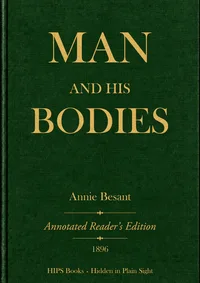
That framework is visible in Man and His Bodies, where Besant distinguishes the individual from the vehicles through which the individual acts. It also shapes Thought Power: attention is not merely a route to getting what one wants, but part of an account of consciousness and its training.
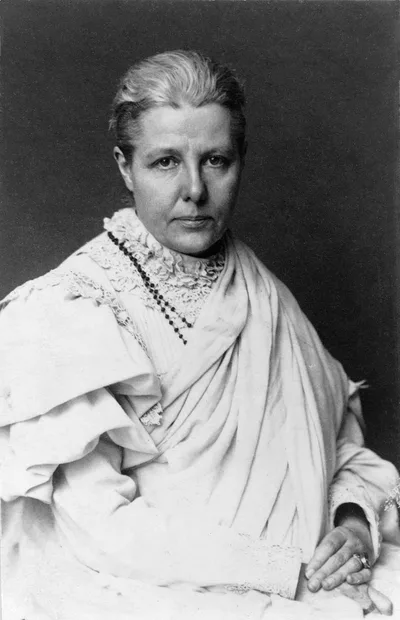
These are descriptions of Besant’s teaching, not established anatomy or psychology. Nor should her version be made to stand for every Theosophist. Pedro Oliveira’s “Which Theosophy?” discusses differences within the movement, including the presentations associated with Besant and Leadbeater. A movement can share a name without every author using its terms in precisely the same way.
New Thought vs Theosophy: a practical comparison
The following comparison is deliberately narrow. It contrasts Atkinson’s Thought Vibration with Besant’s relevant books, rather than claiming that every New Thought writer and every Theosophist fits two fixed boxes.
| Question | Atkinson’s Thought Vibration | Besant’s Theosophical books |
|---|---|---|
| Where does the discussion begin? | With thought, mental attitude and the individual’s capacity for action. | With consciousness and its place within a wider spiritual scheme. |
| What explains mental influence? | Thought waves, vibration and a proposed law of attraction. | Subtle matter, planes and vehicles, alongside attention and mental discipline. |
| What should the reader do? | Develop will, change habits and act rather than merely wish. | Train attention and character within a framework emphasizing spiritual development and service. |
| How much cosmology is needed? | The argument can proceed without the detailed body-and-plane scheme used by Besant. | The larger scheme repeatedly explains what the mental exercises are supposed to accomplish. |
| What remains to be questioned? | Whether mental influence produces the external effects claimed for it. | Whether the proposed unseen structures and processes exist as described. |
The important difference is not that one author believes in thought and the other does not. It is the explanation each builds around thought, and the scale of the conclusions each wants the reader to accept.
Did Atkinson teach that wishing was enough?
No. Whatever one thinks of his larger claims, reducing Thought Vibration to passive wishing misreads the book. The Foreword and My Working Creed repeatedly connect his message with effort and action. He wants readers to stop surrendering their judgment to a supposedly all-knowing teacher and begin doing something themselves.
That gives the book an internal tension worth noticing. Atkinson makes expansive claims about thought shaping circumstances, yet he also warns against dependence, borrowed certainty and expecting an easy route through someone else’s lessons. Both elements belong to the text. Selecting only the promise or only the warning produces a misleading account.
For example, take the ordinary problem of avoiding a difficult task. A passage encouraging attention, practice and persistence can be understood without accepting a theory of thought waves. A passage claiming that a mental state draws corresponding events from outside the person makes a further claim. Success at the first does not automatically prove the second.
This is a useful distinction for anyone reading historical self-culture books. Advice about how you prepare for an action is not equivalent to a guarantee about how other people, illness or economic conditions will respond. The words power and law can conceal that jump if they are allowed to do all the explanatory work.
Atkinson’s rhetoric is often forceful. Read it as the voice of a 1906 author arguing for a position, not as an instruction that a struggling reader must be able to control every outcome.
How does Besant’s Thought Power compare?
Thought Power: Its Control and Culture asks what happens when the mind perceives, remembers, concentrates and meditates. Besant considers how prior opinions affect observation and how deliberate attention differs from simply letting impressions pass through the mind.
Some of that discussion concerns problems a reader can recognize immediately. You can finish a page while scarcely noticing its argument. You can also concentrate on a detail and miss the assumptions directing your attention. These are worthwhile questions even for a reader who does not accept the author’s Theosophy.
But Besant does not leave the discussion at that everyday level. Her account includes thought-transference and the possibility of helping others through thought. Those claims depend on the wider teaching. They are not independently established merely because the chapter on attention contains an observation you find convincing.
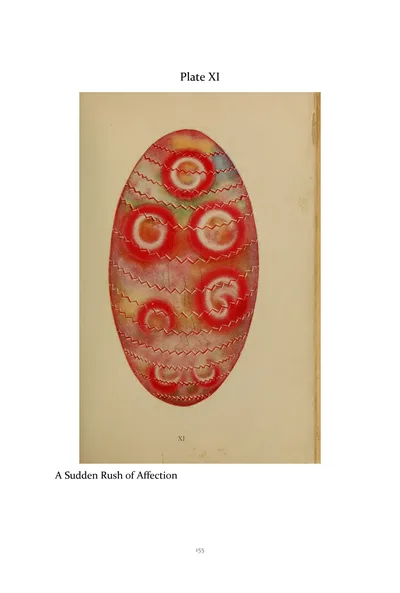
Her illustrated collaboration with Leadbeater, Thought-Forms, makes the difference especially visible. It presents shapes and colours attributed to thoughts, emotions and music. That is a particular proposed account of subtle matter, not simply another way of saying that confidence can affect behaviour.
The best comparison therefore moves one claim at a time. What is the author describing? What explanation is offered? What evidence would distinguish that explanation from a more ordinary one? Those questions are more useful than deciding in advance that both books contain the same secret.
Where do Hermeticism and The Kybalion fit?
The label Hermetic creates another source of confusion. Ancient writings associated with Hermes Trismegistus, later alchemical literature and modern books using Hermetic language belong to different periods and genres. They should not all be treated as one unchanged doctrine.
The Kybalion, published under the name Three Initiates in 1908, belongs to that modern reading landscape. Its seven principles are not the contents list of the ancient Corpus Hermeticum. Our Hermeticism guide explains the distinction and the principles individually.
For the present comparison, the key point is modest: similarity of vocabulary is not a reliable guide to date or origin. Finding the word vibration in a modern book does not demonstrate that an ancient author taught Atkinson’s law of attraction. Nor does finding Indian philosophical terms make a book part of the Theosophical Society’s literature.
Writers borrowed, adapted and disagreed. A useful history can acknowledge connections without erasing boundaries. It can also leave a contested attribution contested. There is no need to settle every authorship debate about The Kybalion to read Atkinson’s signed Thought Vibration accurately.
Which book should you read first?
Choose according to the question you actually have. If you want to understand early law-of-attraction language, start with Thought Vibration and pay attention to both the mental-influence claims and its insistence on action. If your interest is attention and concentration within Theosophy, start with Thought Power.
If Besant’s bodies and planes are the obstacle, Man and His Bodies supplies more of the vocabulary. The Besant reading guide gives a route through her works, while the biographical article explains the life behind those questions.
Whichever book you choose, keep three distinctions in mind:
- A historical claim is not a demonstrated fact merely because it is confidently called a law.
- A useful observation about attention does not validate every metaphysical claim beside it.
- A belief in responsibility must not become blame directed at people experiencing illness, poverty or abuse.
Neither book should replace medical care or be used to promise wealth, recovery or control over another person. Their value as historical reading does not depend on presenting them as scientifically certified programmes.
New Thought and Theosophy are easier to understand once they stop being interchangeable labels. Their shared interest in mental life becomes more revealing when the differences remain visible. Read the argument behind the familiar words, and you gain something better than a slogan: a clearer sense of what each author is asking you to believe.
Sources and reading notes
Primary comparisons use Atkinson’s Thought Vibration (1906), especially the Foreword, My Working Creed and chapters on mental training, and Besant’s Thought Power (1901) and Man and His Bodies (1896). William James’s discussion in lectures IV–V of The Varieties of Religious Experience supplies a contemporary account of New Thought’s variety; the linked transcription displays a later printing of the work first published in 1902. Institutional context comes from TS Adyar and Pedro Oliveira’s article, linked above. These sources describe historical teachings; the comparisons and cautions are modern HIPS interpretations.