About the book
What makes an experience conscious, and how does a person become aware of being a self? In A Study in Consciousness: A Contribution to the Science of Psychology (1904), Annie Besant approaches these questions through Theosophy. Her account connects everyday attention, memory and emotion to a much larger story about the evolution of consciousness.
The book has two parts. The first builds its metaphysical framework: the Monad, planes of existence, the vehicles through which consciousness acts, and the gradual emergence of self-consciousness. The second turns to will, desire and emotion. These are not two unrelated subjects. Besant wants to explain how a being develops an inner life and how that life might then be directed deliberately.
Readers of Man and His Bodies will recognize some of the vocabulary, but this is a more sustained and demanding argument. Besant moves between occult cosmology, distinctions between kinds of awareness, analogies drawn from physical research, and observations about ordinary mental life. The modern introduction and chapter guides help identify which kind of argument is being made rather than treating every passage as equivalent evidence.
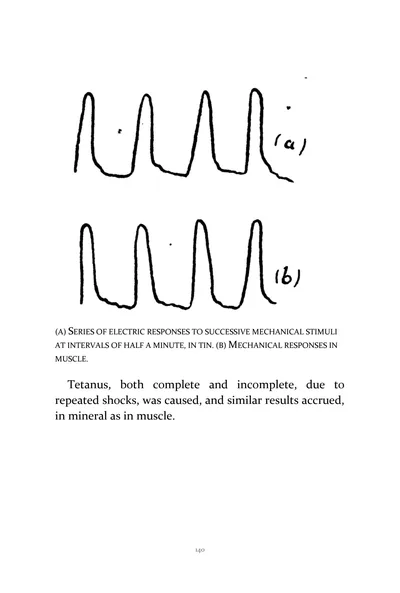
The historical subtitle uses the word science. It does not make this a modern neuroscience textbook or a clinically validated theory of psychology. Besant’s subtle planes, permanent atoms and spiritual evolution are religious and metaphysical teachings. Her use of experimental response curves does not demonstrate that a metal has a human mind or that clairvoyant claims have been independently established.
This HIPS Books edition follows the 1904 printing, retaining its wording and structure in newly typeset, searchable text. Vocabulary appears before the reading units, with reader guides afterwards. Those modern additions remain visibly separate from Besant’s words, so the reader can return to the historical argument and decide what it supports. Colonial-era classifications and claims about illness are preserved for historical study, not endorsed.
What this edition includes
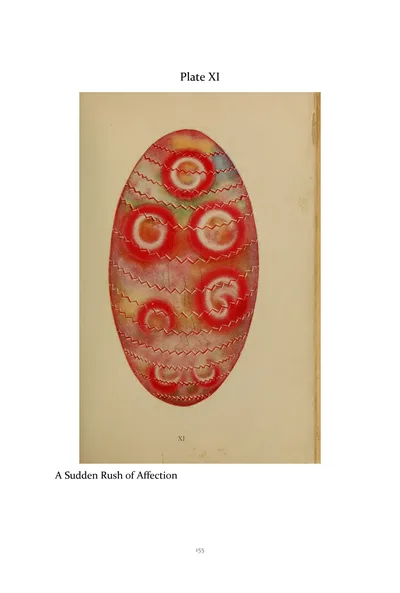
400 pages in the 145 × 215 mm fixed-page PDF layout. Includes the Foreword, Introduction, two parts and eighteen numbered chapters; a modern HIPS introduction; 19 vocabulary sections and 19 reader guides; an 80-term glossary; 87 linked original notes; 12 diagram/table portions, including the response curves discussed by Besant; and labelled original title and contents facsimiles. PDF navigation links historical text, notes and reading support. This is not EPUB, a physical book or modern clinical guidance.
Inside the book: selected contents
A reading overview, not the complete text.
- Consciousness and its vehicles: how Besant relates the Monad, planes and bodies to the experience of being conscious.
- From life to self-consciousness: group souls, individuality and the emergence of a self in her evolutionary account.
- Memory and states of awareness: why her distinction between consciousness and its mechanism matters to the argument.
- Will and desire: motivation, choice and the question of freedom.
- Emotion: the relation between feeling, thought and the deliberate shaping of character.
Key concepts for reading
HIPS editorial explanations of the historical text.
- Monad: the spiritual unit at the beginning of Besant’s account, not a cell or particle established by physical measurement.
- Vehicle: a body or instrument through which consciousness is said to act.
- Permanent atom: a technical term in Theosophical teaching, not the same as an atom in contemporary physics.
- Self-consciousness: awareness of oneself as a subject, distinguished here from mere responsiveness.
Before you buy
How is this different from an archive scan?
An archive scan preserves photographed pages. This is a prepared reading edition: reset text and modern reading support, with the historical author’s words kept distinct. The edition details and preview pages above show what is included in this particular book.
What will I receive, and where do I buy it?
This is a digital PDF edition, not a printed book. The Etsy listing is the place to check the current PDF price and delivery details, and to complete your purchase. Payment and digital delivery are handled by Etsy.
Can I read or print the PDF?
You can read a PDF in a compatible viewer on a computer or tablet. Check the Etsy listing and the edition’s terms for printing permissions and paper size before buying. PDF support and navigation vary by device; this is not an EPUB or a physical copy.
Read this edition
400 pages · PDF · 145 × 215 mm · download from Etsy once payment is confirmed.
Buy on Etsy