Ideas & reading guides
What Is an Astral Body? Besant and Leadbeater Explained
In Annie Besant’s Man and His Bodies, the astral body is the vehicle she associates with desire, emotion and experience on the astral plane. It is not the same as the physical body’s etheric double, and it is not a name for the whole soul. These distinctions belong to her Theosophical teaching, not to established human anatomy.
If you have found different definitions in different books, you have not necessarily read carelessly. Older Theosophical writers did not always use the same terms in the same way. Besant herself pauses to explain a change in terminology. Reading that explanation can save a great deal of confusion later.
The aim here is to make the vocabulary understandable: what the bodies are supposed to do, how they relate to an aura, and why a vivid picture is not proof that the proposed structure exists. This is a guide to reading historical books, not an astral-projection tutorial.
Why does Besant describe more than one body?
Besant begins with the idea that a person is more than any single instrument through which the person acts. In Man and His Bodies, she describes bodies as vehicles: they allow consciousness to function in particular conditions, while also limiting what it can express there.
Imagine a musician playing instruments with different ranges. The musician is not identical with one instrument, yet what can be heard depends on the instrument being played. That comparison makes Besant’s intended relationship easier to picture. It does not establish that her proposed vehicles actually exist.
This distinction explains why a list of bodies, by itself, is not enough. The book is not merely adding invisible layers around an ordinary person. It asks the reader to separate the conscious individual from the means by which that individual is said to perceive and act.
Its sequence follows that argument. Besant first considers the physical body, then the astral and mental bodies, before returning to the person whose continuity the changing vehicles are supposed to explain. Questions about dreams, death and reincarnation enter because the larger question is what can remain when one mode of expression stops.
For the history behind these ideas, our Theosophy introduction explains the movement and its vocabulary. The distinctions below concern Besant’s particular presentation rather than every system that has ever used the phrase subtle body.
Astral body, etheric double and causal body: what is the difference?
The most useful first distinction is that Besant places the etheric double within the physical category. Although she describes it as subtler than the visible body, that does not make it identical with her astral body.
| Term in this account | What Besant associates with it | Common reading mistake |
|---|---|---|
| Dense physical body | The familiar bodily instrument acting in the physical world. | Assuming that her word physical refers only to this visible portion. |
| Etheric double | A subtler physical counterpart connected with the dense body. | Treating it as simply another name for the travelling astral body. |
| Astral body | Desire, emotion and a proposed vehicle of experience on the astral plane. | Using it as a synonym for the whole soul. |
| Lower mental body | The vehicle associated with more concrete mental activity. | Confusing it with the enduring individuality discussed under causal body. |
| Causal body | A more enduring vehicle connected with individuality across lives. | Reading causal as a term from modern neuroscience or physical causation. |
These rows map words in a historical theory. They are not separate organs demonstrated by a scan, and the divisions should not be used to diagnose a person’s feelings, health or spiritual standing.
The distinction also shows why the bodies are not meant to be separate people. In Besant’s argument, different vehicles allow different activities of the same individual. The relationship is functional as well as spatial. Merely drawing several outlines around a human figure can obscure that point.
When a passage becomes difficult, ask two questions: which vehicle is being discussed, and what function is assigned to it? That is usually more helpful than trying to remember a coloured chart without the argument around it.
Why does astral sometimes mean something different in older books?
Because a vocabulary can change while the same words remain in circulation. At the beginning of her physical-body discussion, Besant explains why she prefers the expression etheric double. She discusses the earlier use of Linga Sharîra and the confusion caused by applying terms inconsistently.
This is a particularly valuable passage because it shows the author dealing with the problem rather than a modern commentator inventing it. The warning belongs to the 1896 text. It tells a reader not to assume that every occurrence of astral in an earlier or later work refers to exactly the same thing.
Pedro Oliveira’s “Which Theosophy?” places differences between Blavatsky’s terminology and Besant and Leadbeater’s presentations alongside one another. It is a discussion from within the Theosophical movement, not independent scientific verification of its claims. Its usefulness here is to document that the differences are recognized within the tradition itself.
The practical rule is simple: define a term from the book you are reading before comparing it with another book. If the author provides a qualification or footnote, keep it. A modern glossary that smooths every difference into one universal meaning can make a historical argument harder, not easier, to understand.
The same rule helps when moving between Blavatsky’s Key to Theosophy and Besant’s manuals. Similar subject matter does not remove the need to notice how each author has divided and named it.
What do dreams have to do with the astral body?
Dreams matter because Besant wants to explain how consciousness could function beyond its ordinary waking arrangement—and why the waking person might fail to remember that experience. Within her account, experience and the ability to bring back a memory are different questions.
She describes the astral vehicle as more or less organized and capable. The condition of the vehicle is supposed to affect what can be perceived and expressed through it. She also distinguishes confused dream imagery from the clearer experiences she attributes to a more developed astral consciousness.
That is the structure of her explanation, not a test a reader can apply to last night’s dream. A memorable dream does not, by itself, establish that a person travelled outside the body. Its clarity cannot certify the geography or mechanism Besant proposes.
There is a revealing qualification near the start of her astral-body chapter. Besant explicitly allows for errors of observation and inference and does not claim infallibility. That admission deserves to remain visible beside the confident descriptions that follow. It helps us read her as an author making claims that can be questioned, not as a voice exempt from correction.
If you are interested in dreams, read the section for the way it separates an experience, its interpretation and its recollection. Those distinctions can be intellectually useful without requiring acceptance of the book’s explanation of invisible bodies. There is no need to induce unusual states, disturb sleep or interpret frightening experiences through this scheme.
Is an astral body the same thing as an aura?
Not in the books we are comparing. A body is a proposed vehicle with a particular role. An aura is the surrounding appearance attributed to one or more aspects of the person. Treating the words as interchangeable loses the distinction between the structure being proposed and the appearance it is supposed to produce.
Leadbeater’s Man Visible and Invisible makes those appearances central. Its colour key, diagrams and plates represent conditions and stages he claimed to observe through trained clairvoyance. They help a reader see how he intended his account to be understood.
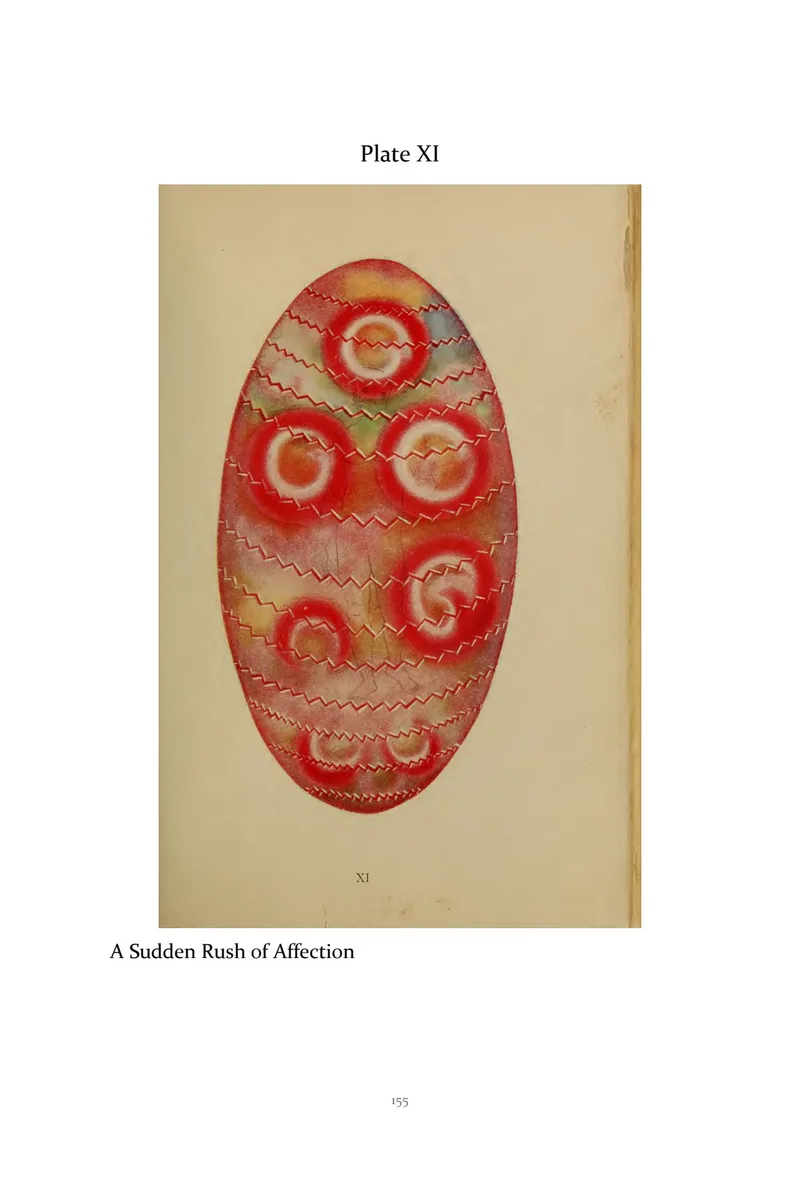
The featured historical illustration, Plate XI, is labelled A Sudden Rush of Affection. Its colours and forms are part of that representational system. It is not a photograph of an emotion, and it does not allow us to infer that another person’s affection can be measured by looking for the same pattern.
A. Marques’s The Human Aura provides another elaborate classification. Our article on Marques’s 1896 book explains his account and the kinds of evidence he drew together. Comparison is useful precisely because different authors organize the subject differently.
Thought-Forms introduces a further distinction. The shapes attributed to a thought or feeling are not simply a substitute name for the individual’s entire astral body. A person, the vehicles ascribed to that person and a form supposedly produced by an activity of mind are three different ideas. The Thought-Forms guide examines that last category.
What can a colour plate actually establish?
A plate can establish how an author wanted a claim to be pictured. It can help identify recurring meanings, compare examples and follow the relationship between a description and an image. Those are genuine uses of historical evidence.
It cannot, merely by being detailed, establish that the proposed object was independently observed. A drawing of an invisible structure is still dependent on the account behind it. Repeating the account in a second illustration does not automatically supply a second kind of evidence.
Take an ordinary example from the book’s subject matter: anger. A reader may recognize anger as an experience and find a sharp red pattern an expressive representation of it. Agreement that the picture feels appropriate does not prove that anger produces that particular shape in subtle matter. The recognizable feeling and the proposed external form remain separate claims.
There is also an ethical reason for keeping the boundary clear. These texts connect colour, development and character, and some include racist or colonial hierarchies. Historical classifications are not valid measures of human worth. They must not become a way of judging someone else’s health, morality or supposed spiritual level.
Understanding a belief accurately and accepting it as true are different achievements. A reader can pursue the first seriously while leaving the second unresolved or rejecting it.
Where should a beginner start reading?
Start with Man and His Bodies if terminology is the main obstacle. A short reading sequence keeps the definitions clear:
- Read The Physical Body first. Note why Besant includes the etheric double in that category.
- Read The Astral Body next. Record the function she assigns it, not just the name.
- Compare a relevant passage with Leadbeater’s illustrations. Ask what the picture adds and what it cannot prove.
Keep a short note of each term as the author defines it. Add the work and year beside the definition. If another book uses the word differently, record both meanings rather than forcing them to agree. This small habit prevents a surprisingly large amount of confusion.
For a broader route through Besant, use the guide to her books. If you want the larger theory behind the vehicles, A Study in Consciousness develops it more fully, but it is a more demanding starting point.
The main answer is therefore specific rather than universal. In Besant’s 1896 account, the astral body is a proposed vehicle associated with desire and emotion, distinct from the etheric double and from the whole individual. Keeping that meaning in view makes the historical text more intelligible—and prevents its vocabulary from doing work that its evidence cannot support.
Sources and edition notes
Primary reading: Besant’s Man and His Bodies (1896), particularly the opening physical-body discussion and The Astral Body; Leadbeater’s Man Visible and Invisible (1902); and Marques’s The Human Aura (1896). These works were consulted through the HIPS reading editions. Terminological context also draws on Pedro Oliveira’s Which Theosophy? in Theosophy in Australia (March 2006), linked above. Definitions in this article describe those historical teachings, not medical anatomy. The comparisons, cautions and reading method are modern HIPS commentary.