Ideas & reading guides
Root Cellars and Winter Food Storage in a 1917 Manual
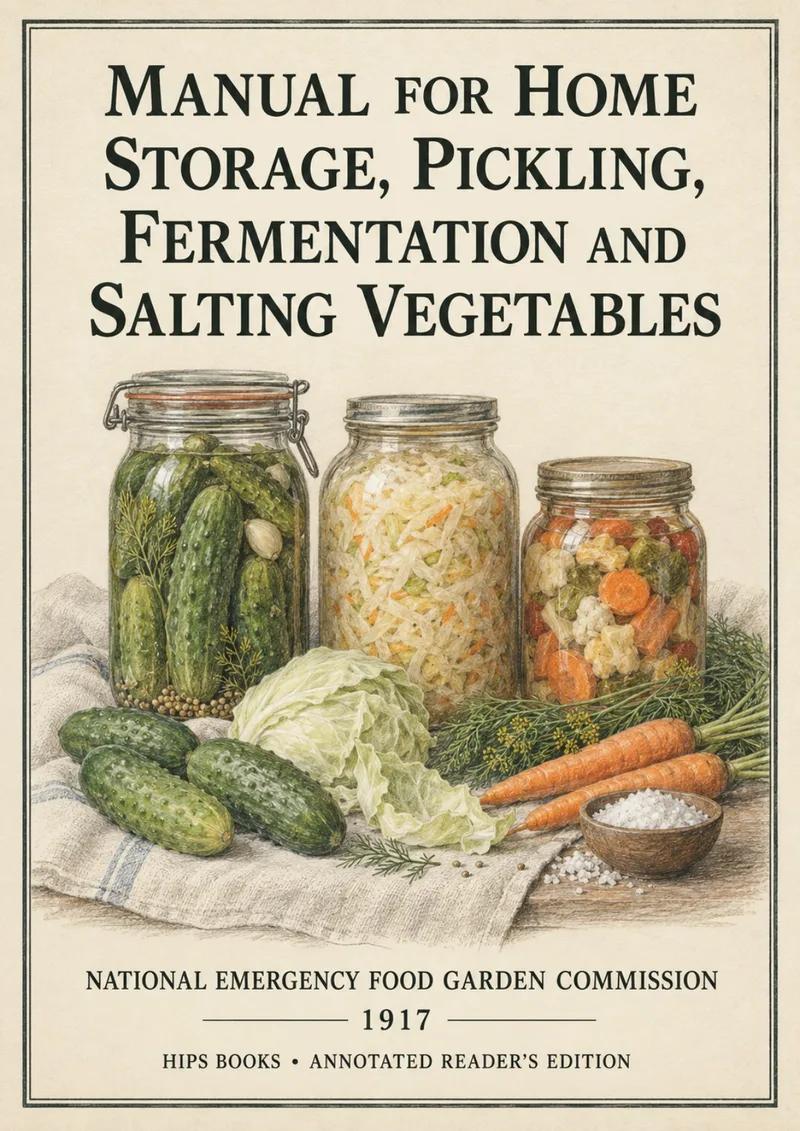
Winter food storage was a central task in the National Emergency Food Garden Commission's 1917 manual. The booklet asks households to protect the garden harvest through cellars, outdoor storage, fermentation, salting and pickling. Its message is that growing more food accomplishes little if the surplus disappears before it is needed.
What makes the manual interesting is the way it connects an ordinary domestic space to a large public problem. A cellar is not only a place below a house. In the book's wartime argument, it becomes part of the effort to feed families through winter while leaving other supplies available for overseas needs.
This article explains what the manual proposed and what those proposals reveal about its period. It is not a guide to building a cellar, storing food safely or fermenting vegetables. The historical directions remain historical; modern decisions need current food-safety and, where relevant, building guidance.
Why a 1917 booklet starts with the harvest after harvest
The opening says that canning and drying are important but do not replace plain storage. That is a useful way into the whole document. Instead of assuming that every vegetable must become a jar or dried product, it asks which parts of the harvest might be kept in a less altered form.
The urgency comes from wartime. The text connects food saved at home with food that can be spared for export. It warns that a large gardening effort could also produce a large waste problem if households did not prepare for surplus. Those are the booklet's arguments, not neutral measurements supplied by this article.
This gives it a different starting point from a modern lifestyle discussion of a picturesque root cellar. The interest is not mainly the appearance of the room or a feeling of returning to nature. It is the practical pressure of quantity, timing and need. What should happen when a crop arrives faster than it can be eaten?
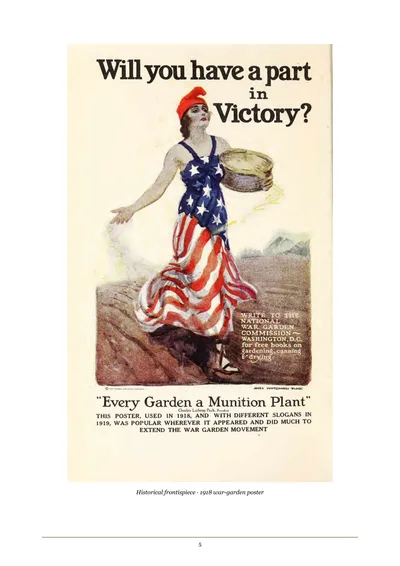
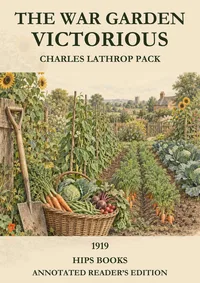
The Smithsonian's history of gardening for the common good places wartime food growing within a civic campaign. Charles Lathrop Pack's The War Garden Victorious follows that campaign through production and conservation. The short 1917 manual gives a closer view of what its household reader was being asked to consider.
A cellar was a controlled environment, not just a dark room
The manual pays attention to conditions. It discusses protection against freezing, moisture, ventilation and changes of temperature. That makes the cellar a managed part of the household rather than a place where food could simply be forgotten until spring.
The potato discussion is a concrete example. The text distinguishes moisture sufficient to prevent shriveling from moisture gathering on the surface. It also describes inspection and the removal of damaged produce. The historical point is that storage demanded observation. Putting the crop away was the beginning of a continuing task, not the end.
The booklet also distinguishes a cellar from other parts of the house. Its treatment of onions favors a dry, airy setting, while the discussion of other crops places different weight on moisture and protection. It does not offer one ideal condition for all vegetables.
That variation remains important in current guidance. University of Minnesota Extension's vegetable-harvesting and storage guide separates crops by their needs rather than treating every vegetable alike. The modern guide is the appropriate place to check present-day recommendations. Its existence does not validate every number or practice in the 1917 text.
As a reader, notice the practical assumptions behind the old advice. The household needs a suitable space and someone able to inspect it. The house's heating, layout and moisture conditions affect what “cellar” means in practice. A single word can conceal quite different environments.
Outdoor storage shows how households used the ground itself
The manual also describes pits, trenches and an outdoor cellar. These sections show an attempt to use the ground and insulating materials as part of seasonal storage. Different arrangements respond to crops, weather and the need to retrieve food later.
One revealing passage favors several smaller stores over a single large one. The reason concerns what happens when a store is opened and its contents disturbed. This is a planning issue: access changes the conditions that made keeping the food possible. The household has to think about use, not only about capacity.
Another describes an outdoor cellar as potentially shared by several families. That opens the subject beyond one household's private facilities. Some solutions depend on common space, effort and a workable arrangement for access. The manual's self-help world is not necessarily a world in which everyone operates alone.
| Arrangement in the manual | Historical purpose | What it helps us notice |
|---|---|---|
| Indoor cellar | Keep suitable crops through cold months | Household space had to be managed |
| Pit or trench | Use a protected outdoor store | Retrieval and weather changed the problem |
| Outdoor cellar | Create a more substantial storage place | Building work and resources were involved |
| Shared store | Serve more than one family | Cooperation could extend available facilities |
These are descriptions, not construction plans. An old account does not establish that a proposed excavation or structure is safe on a present-day site. Soil stability, drainage, access and building requirements need competent assessment. Nor should a historical sketch be treated as a complete design simply because its instructions sound confident.
Potatoes, onions and squashes tell different storage stories
The manual's crop-by-crop approach is one of its clearest features. Potatoes occupy a prominent place, but their discussion does not stand in for every crop. Onions and squashes are treated differently, and sweet potatoes receive their own account rather than being folded into the ordinary potato section.
That is a useful corrective to the phrase “put it in the root cellar.” Some foods in the document are roots; others are not. Some are described through moisture, others through dryness or a different degree of warmth. The term root cellar is a convenient name, not a complete classification of storage needs.
Two simple comparisons make the distinction visible. The onion section is concerned with air circulation and dryness. The potato section attends to avoiding both wilting and excess moisture. You do not need to copy the manual's temperatures to understand that these are different tasks.
The sweet-potato section then introduces preparation before storage as a separate concern. Again, the historical value is the sequence: a crop's condition when it enters the store affects what happens afterward. The store cannot be expected to repair every defect in the harvest.
For actual present-day storage, consult current extension guidance by vegetable. Climate, variety and the available facility matter. This article does not supply a universal temperature, a guaranteed keeping time or a test for deciding whether questionable food is safe.
Beyond the cellar: cabbage, pickles and potato starch
The booklet changes method when it moves into fermentation and pickling. It is no longer simply trying to keep a vegetable in its harvested state. It describes altering the food and its conditions through a process. That difference helps explain why a general storage idea cannot replace a tested preservation method.
Cabbage provides an example because it appears both as something to store and as material for fermentation. The same crop can lead to a different finished food and a different set of requirements. In the historical manual, the alternatives belong to a household repertoire for using the harvest.
The potato-starch section goes further. It proposes recovering a useful food material from a portion of the crop and links the result to the demand for other staple foods. The text's thrift concerns not only keeping whole vegetables but finding value in material that might otherwise be wasted.
That passage should not be read as permission to make food from rotten or unsafe potatoes. The document's language reflects its own assumptions about waste and usability. We can identify the economic idea without recommending its selection or processing directions.
Modern fermentation guidance makes another boundary clear. The National Center for Home Food Preservation explains that salt and tested ingredient proportions matter to the safety of fermented pickles and sauerkraut. Reducing or guessing those proportions is not justified by a broad appeal to traditional practice.
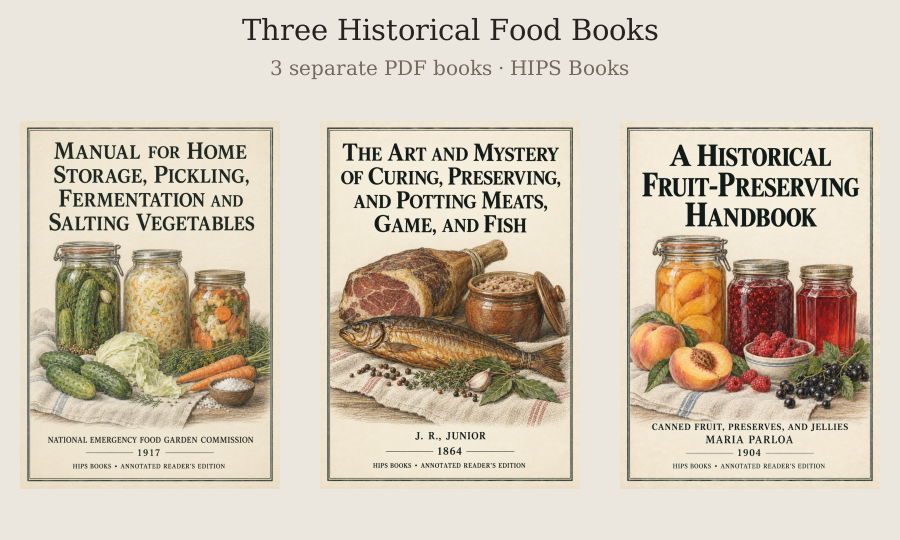
Our comparison of food preservation before refrigeration places this booklet beside an 1864 curing manual and Maria Parloa's fruit-preserving bulletin. Together they show why “preservation” names several different problems, not one interchangeable technique.
What the manual reveals about labor and opportunity
The booklet's recommendations assume time and facilities. A person must harvest, sort, prepare, inspect and use food in a sensible order. Tools, vessels, fuel and space are part of the system. Reading only the named method can make that work disappear from view.
The same applies to access. A household with a useful cellar faces a different problem from one without it. Outdoor space and shared facilities introduce further possibilities, but also coordination and responsibility. The manual proposes ways to use resources; it does not prove that every reader had equal access to them.
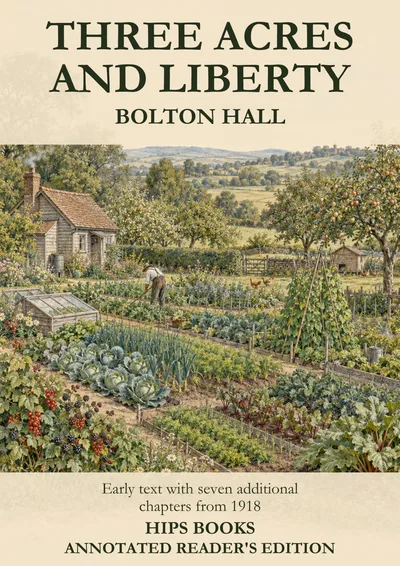
This is a good reason to compare it with Bolton Hall's account of small plots and livelihood. Hall asks how an opportunity becomes productive. The storage manual asks how that production remains useful later. Land, knowledge and time connect the two conversations.
Its wartime tone also changes the meaning of ordinary work. A domestic task is described as participation in something larger. Whether a reader finds that rhetoric inspiring or demanding, it deserves to be noticed. The manual is asking not only “how can food be kept?” but “why is keeping it now a public duty?”
For a close reading, make two lists. On one, note the resources the manual assumes. On the other, note the benefits it promises. The distance between those lists often reveals more about a historical household system than a copied paragraph of instructions would.
A useful way to approach winter food storage history
Read the opening case for storage, then compare the cellar and outdoor sections. Follow one crop across more than one method. Finally, turn to fermentation and the use of surplus materials. This route reveals the booklet's connected logic rather than reducing it to a few nostalgic household tricks.
Ask what is being kept unchanged, what is being transformed, and what work makes either approach possible. Keep the historical answer separate from a modern decision about safety. That allows the past to sharpen your attention without making the old book an authority for today's batch of food or building project.
The HIPS three-book preservation collection includes the restored 1917 manual with labelled reader guides. Its new interpretive plates are modern artwork, not diagrams authenticated by the commission. For the wider campaign, continue with the First World War origins of victory gardens or explore the gardening-history books.
The manual's central observation is still easy to understand: a harvest needs a plan for what comes next. Its historical detail shows how households tried to build that plan with the spaces, tools and knowledge available to them. Reading it carefully brings those ordinary systems back into view.
Sources and further reading
- Primary text: National Emergency Food Garden Commission, Manual for Home Storage, Pickling, Fermentation and Salting Vegetables (1917), especially winter storage, potatoes, fermentation and pickling; available in the HIPS preservation collection.
- Comparative primary text: Charles Lathrop Pack, The War Garden Victorious (1919), conservation chapters and the bound-in home-storage pamphlet.
- Smithsonian Libraries: Gardening for the Common Good, for the public campaign context.
- University of Minnesota Extension: Harvesting and storing home garden vegetables and NCHFP: General Information on Fermenting, for present-day boundaries and further guidance.