About the book
A garden could be a wartime contribution, not just a private source of vegetables. The War Garden Victorious tells how Charles Lathrop Pack and the National War Garden Commission promoted that idea during the First World War. Published in 1919, the book records a campaign that brought growing food into schools, neighbourhoods, businesses, railroads and military settings.
Its nineteen chapters follow both the organisation of the movement and the people who put it into practice. Pack considers types of war gardens, school gardeners, community plots, cooperation and the use of city land. Other chapters describe the assistance of business, railroads and the press. The question is not only how to grow a crop, but how an organised public campaign could mobilise people and resources around food.
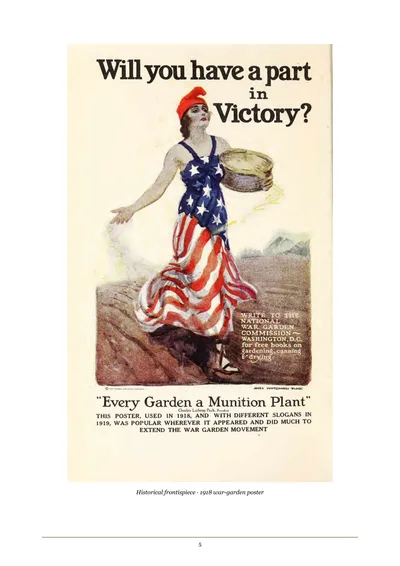
The later chapters turn to the garden surplus: community conservation, drying, dried foods and the future of dehydration. Photographs, posters and historical line drawings show how the campaign was presented and what kinds of activity it encouraged. For readers interested in victory gardens, American social history or the history of food production, these details connect the familiar phrase to a specific First World War setting.
Pack writes as a participant and advocate. His account is therefore valuable as a period perspective, not an impartial modern assessment of every claim about the campaign’s success. The reader guides offer a place to examine how patriotic appeals, practical organisation and reported results work together in his argument. Restoring the original voice preserves those questions rather than replacing it with a modern retelling.
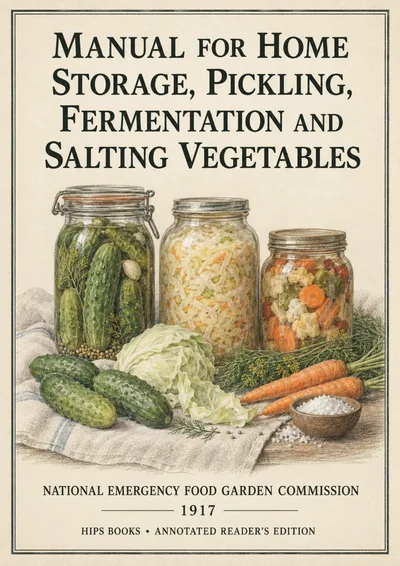
The historical volume also bound in two practical 1919 Victory Edition pamphlets: War Gardening and Home Storage of Vegetables, and Home Canning and Drying of Vegetables and Fruits. Both are included in this edition. Together they show the instructions that accompanied the public campaign, while making this more than a book of garden photographs or a general history alone.
Those instructions need to be read historically. Some canning and pesticide directions are unsafe today. HIPS Books retains the period text but adds clearly identified safety notices; it does not recommend using old preservation processes or hazardous treatments. Use current research-tested food-preservation guidance and current qualified crop-treatment advice before acting on any practical method. The book is for reading, context and research, not a replacement for a modern safety manual.
What this edition includes
One searchable English-language A4 PDF, 282 pages. Includes all nineteen historical chapters and both original pamphlets, with photographs, posters, diagrams and line drawings near their related material. Selected plans, numerical tables and the pamphlet indexes remain source graphics.
Clickable contents and bookmarks support navigation. Chapter guides, reflection questions and safety notices are modern HIPS Books additions, clearly distinct from Pack’s text. Read on screen or print for personal reading; no physical book is shipped. The cover, typesetting and modern editorial material belong to this prepared reader’s edition.
Inside the book: selected contents
A reading overview, not the complete text.
- The National War Garden Commission: Pack recounts the organisation behind the American First World War campaign.
- Types of War Gardens: schools, businesses, railroads and communities appear as settings for growing food.
- Community Gardening and Cooperation: individual plots become part of a wider organised effort.
- Conserving the Garden Surplus: preserving and drying are presented as the next task after harvesting.
- Appendices: period gardening, home storage, canning and drying material accompanies the campaign history.
Pack writes as a promoter of the campaign. Read his claims and totals as part of that perspective. The historical preservation directions are not current safe-practice instructions.
Key concepts for reading
HIPS editorial explanations of the historical text.
- War garden: a food-growing plot associated with the wartime mobilisation described in the book.
- Community garden: plots or growing work organised with local cooperation.
- Conservation: saving food and reducing waste in this wartime context.
- Dehydration: removing moisture from produce; the historical directions are not a modern validated process.
- Campaign publicity: posters and press coverage used to recruit people and sustain participation.
Before you buy
How is this different from an archive scan?
An archive scan preserves photographed pages. This is a prepared reading edition: reset text and modern reading support, with the historical author’s words kept distinct. The edition details and preview pages above show what is included in this particular book.
What will I receive, and where do I buy it?
This is a digital PDF edition, not a printed book. The Etsy listing is the place to check the current PDF price and delivery details, and to complete your purchase. Payment and digital delivery are handled by Etsy.
Can I read or print the PDF?
You can read a PDF in a compatible viewer on a computer or tablet. Check the Etsy listing and the edition’s terms for printing permissions and paper size before buying. PDF support and navigation vary by device; this is not an EPUB or a physical copy.